
When pharmaceutical manufacturers evaluate a mini sampling checkweigher for capsules and tablets, accuracy is almost always the first specification they ask about—and for good reason. A sampling checkweigher serves as the process control checkpoint between the capsule filling machine or tablet press and final packaging. If its readings are not trustworthy, operators may either miss a drifting fill weight or over-correct a stable process, both of which carry cost and compliance consequences.
The short answer is that a well-engineered capsule tablet mini sampling checkweigher can achieve accuracy in the ±1 mg range, with display resolution as fine as 0.1 mg. But the more useful answer requires understanding what “accuracy” means in this context, which factors influence it, and how it compares to full inline inspection systems.
The Typical Accuracy Specification for Mini Sampling Checkweighers
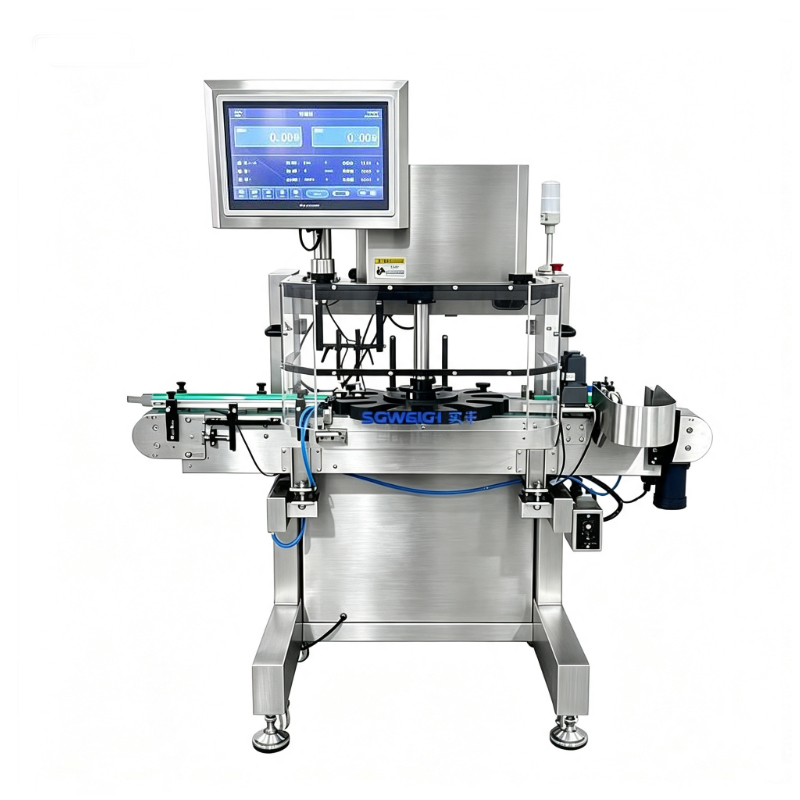
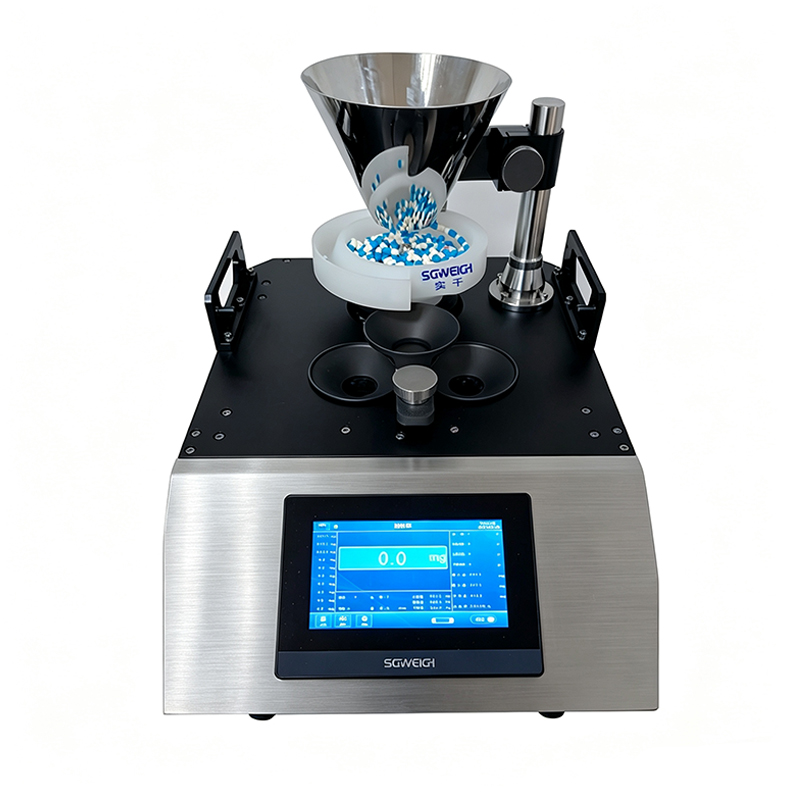
For compact, benchtop-style sampling units designed for periodic capsule and tablet weight verification, the standard accuracy specification is ±1 mg with a display scale of 0.1 mg . This level of precision is appropriate for the majority of solid dosage quality control applications, where weight variations of a few milligrams can indicate a filling or compression problem that needs attention.-10
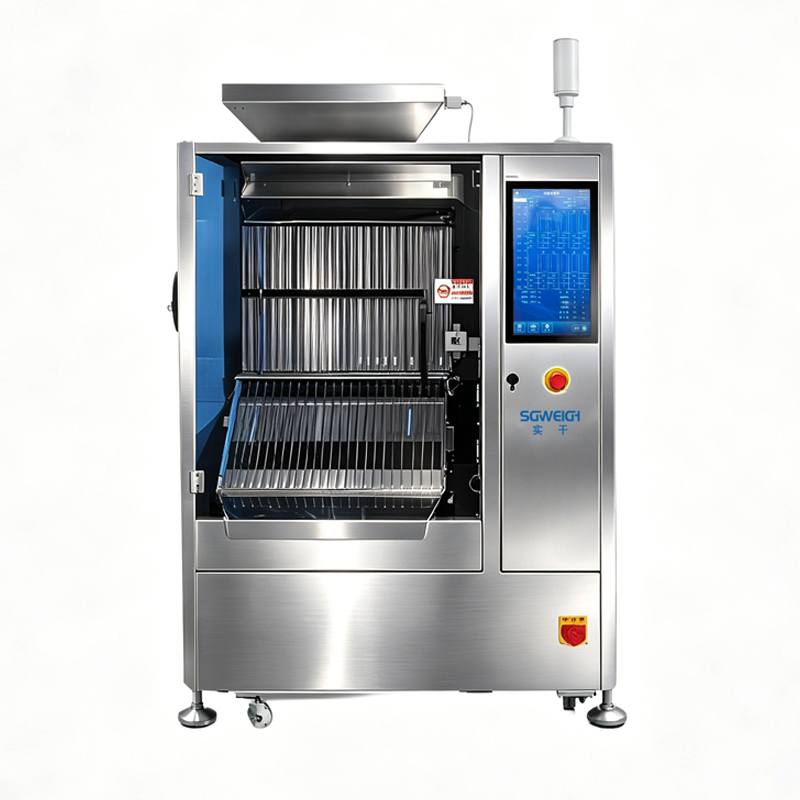
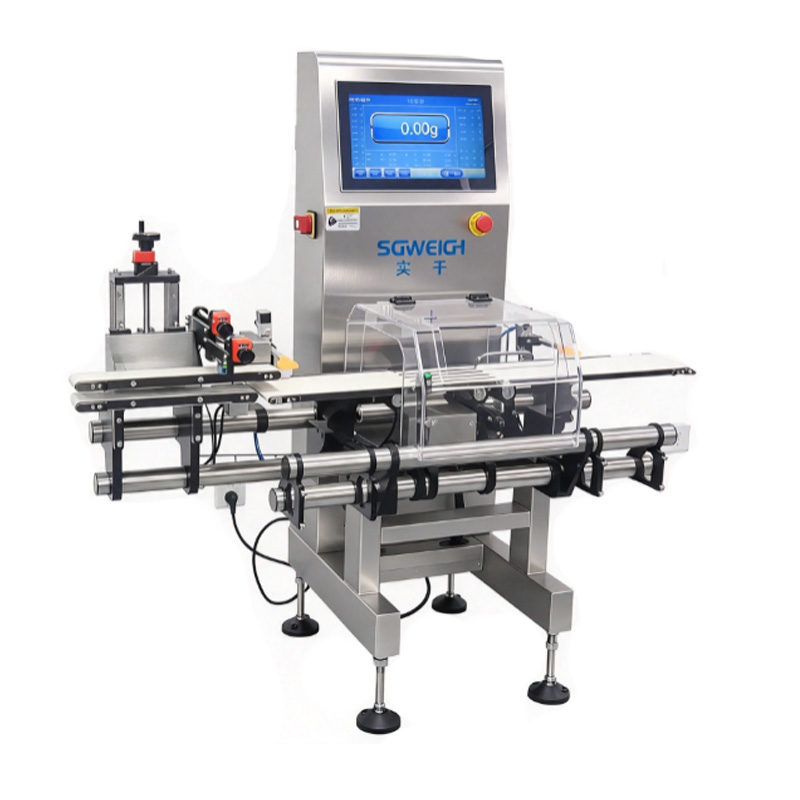
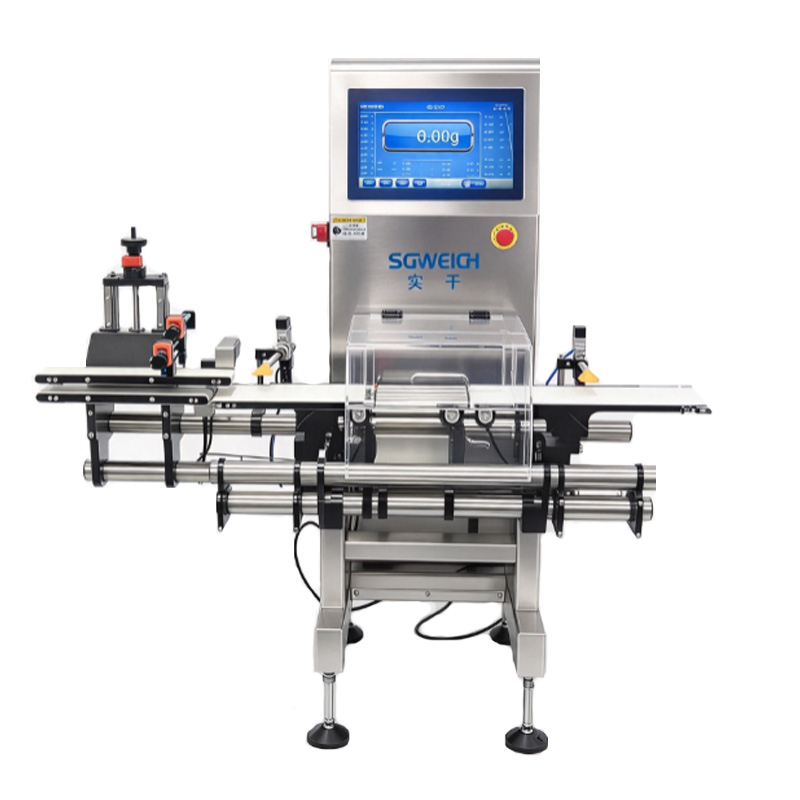
For comparison, full inline checkweighers used for 100% inspection of every capsule or tablet—such as the SG-JN series—specify a “highest sorting accuracy” of ±0.5 mg across a weighing range of 5–2000 mg . The gap between ±0.5 mg and ±1 mg reflects the different operating conditions: a sampling unit weighs a small batch under controlled, low-throughput conditions, while an inline system must maintain its accuracy while processing tens of thousands of units per hour.
What “Accuracy” Means in a Pharmaceutical Sampling Context
Accuracy specifications for pharmaceutical checkweighers are typically expressed in one of two ways, and it is worth knowing which one a supplier is quoting.
Static accuracy refers to the performance of the weighing sensor when a known test weight is placed on the platform under stable conditions. This is the figure most commonly listed on datasheets and is the basis for routine calibration verification.
Dynamic accuracy, sometimes expressed as ±3σ (three standard deviations), describes performance when products are moving through the system. This is the more meaningful figure for production use, because it accounts for the real-world variables—vibration, product orientation, feed consistency—that affect the reading. A system quoting “±1 mg (3 Sigma)” is stating that 99.73% of measurements will fall within ±1 mg of the true value under specified operating conditions.
For a mini sampling checkweigher operating at modest throughput (typically around 40 pieces per minute for a single-channel benchtop unit) , the dynamic accuracy is often close to the static accuracy because the product handling is gentle and the weighing time per unit is relatively long compared to high-speed inline systems.

Factors That Affect Achievable Accuracy
Even within the ±1 mg specification range, actual performance depends on several controllable factors.
Product weight relative to capacity. A sampling checkweigher with a 0.1 mg display scale performs best when the product weight sits comfortably within its calibrated range. Pushing a very light capsule (under 100 mg) or a heavy tablet (over 1000 mg) toward the extremes of the sensor’s capacity can reduce relative accuracy.
Environmental stability. Pharmaceutical weighing is sensitive to temperature fluctuation and air movement. The recommended operating environment for precision pharmaceutical checkweighers is typically 15–30°C with temperature changes not exceeding 1°C per hour, and humidity of 30–70% without condensation . Placing the sampling unit near a HVAC vent, a doorway, or a vibration source such as a nearby capsule filling machine will degrade performance regardless of the sensor’s rated accuracy.
Calibration discipline. A sampling checkweigher is only as accurate as its most recent calibration. For pharmaceutical quality control, calibration verification with certified test weights should be performed at intervals determined by risk assessment—commonly monthly for routine use, and more frequently if the unit is moved or the environment fluctuates . Using the unit without current calibration verification undermines the entire purpose of sampling.
Feed consistency. If capsules or tablets are fed onto the weighing track in an irregular orientation or with inconsistent spacing, the dynamic reading can vary even when the true weight is stable. Vibratory feeder adjustment and track cleanliness directly influence measurement repeatability.
How Sampling Accuracy Compares to Full Inline Inspection
It is important to position sampling checkweigher accuracy correctly within a facility’s overall quality control strategy. A mini sampling checkweigher at ±1 mg is not a replacement for a full inline system at ±0.5 mg. The two serve different purposes.
A sampling checkweigher answers the question: “Is the filling or pressing process currently stable and within specification?” It provides feedback for process adjustment before large quantities of non-compliant product are manufactured.
A full inline checkweigher answers the question: “Is every single unit in this batch compliant?” It provides the final release gate before packaging.
Many pharmaceutical manufacturers use both: sampling for real-time process monitoring and full inspection for batch release. The ±1 mg accuracy of the sampling unit is sufficient for detecting meaningful process drift; the ±0.5 mg accuracy of the inline unit is appropriate for final compliance verification .
Matching Accuracy to Your Product and Process
When selecting a mini sampling checkweigher, the ±1 mg figure should be evaluated against your specific products. For capsules and tablets weighing above 200 mg, ±1 mg represents a relative accuracy of 0.5% or better—more than adequate for detecting fill weight deviations that matter clinically and commercially. For very low-dose products under 50 mg, tighter absolute accuracy may be required, and the feasibility should be confirmed through sample testing with your actual product.
The most reliable approach is to request a product-specific demonstration using your capsules or tablets, under conditions that approximate your production environment. A supplier confident in their equipment should welcome this test.
Need to Verify Weight Accuracy for Your Capsules and Tablets?
Whether you are evaluating a pharmaceutical sampling checkweigher for capsule filling lines, a tablet weight verification scale for compression processes, or a compact milligram-level checkweigher for multi-product facilities, the right accuracy specification depends on your products, your process window, and your quality control strategy.
Shanghai Shigan (SGWEIGH) manufactures mini sampling checkweighers and full inline capsule/tablet checkweighing systems with milligram-level precision, designed for pharmaceutical production environments. Our team can help you determine whether ±1 mg sampling accuracy is appropriate for your application, or whether a different configuration better matches your quality control requirements.
Contact us today to discuss your accuracy requirements or to arrange a sample test with your products